Lotus
Lotus Cars was founded in 1948 in London by Colin Chapman, later establishing its primary engineering and manufacturing headquarters in Hethel, Norfolk. The British automaker built its reputation on lightweight chassis design and direct handling dynamics, guided by Chapman's philosophy to "simplify, then add lightness." This engineering focus yielded substantial success in motorsport, including seven Formula 1 World Constructors' Championships.
Majority-owned by Geely since 2017, Lotus is transitioning away from its historical lineage of lightweight mid-engine sports cars - such as the Elise, Exige, and Emira - toward high-performance electric vehicles. The brand's modern lineup includes the 2,000-horsepower Evija hypercar, the Eletre SUV, and the Emeya electric hyper-GT.
Models over time
Lotus Esprit
Lotus Elise
Lotus Exige
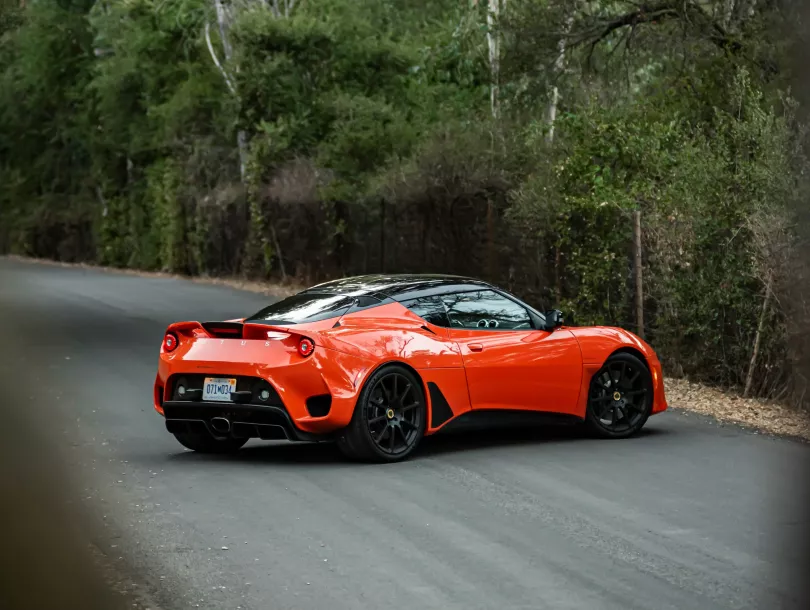
Lotus Evora
Lotus Emira
Lotus Eletre
Lotus Emeya
Lotus Evija
Data
Registration
Official recall campaigns.
Facts
The Esprit combined a lightweight glass-fibre-reinforced body with the steel backbone chassis characteristic of Lotus road cars of the era.
The early Esprit S1 used a mid-mounted 2.0-litre four-cylinder engine paired with a five-speed gearbox.
Rather than the common electric-assist solution, the Emira uses hydraulic power steering, selected by Lotus with steering feel in mind.
Lotus developed two Emira chassis tunes: the road-oriented Tour setup and a firmer Sports setup for drivers seeking sharper responses.
For the lightest Emira specification, Lotus quoted a target kerb weight of about 1,405 kg.
For the initial Emira program, Lotus announced outputs of roughly 360 to 400 hp depending on the powertrain.
Depending on engine and version, the Emira was engineered with a six-speed manual, conventional automatic or dual-clutch transmission.
The Emira was also offered with a Toyota-sourced supercharged 3.5-litre V6, an engine family previously developed for the Evora and Exige.
One of the Emira's powerplants is a turbocharged 2.0-litre four-cylinder engine supplied by Mercedes-AMG.
The Emira was built on the Lotus Sports Car Architecture, using the brand's bonded-aluminium structural approach.
More facts about Lotus
Showing 21–30 of 80 facts